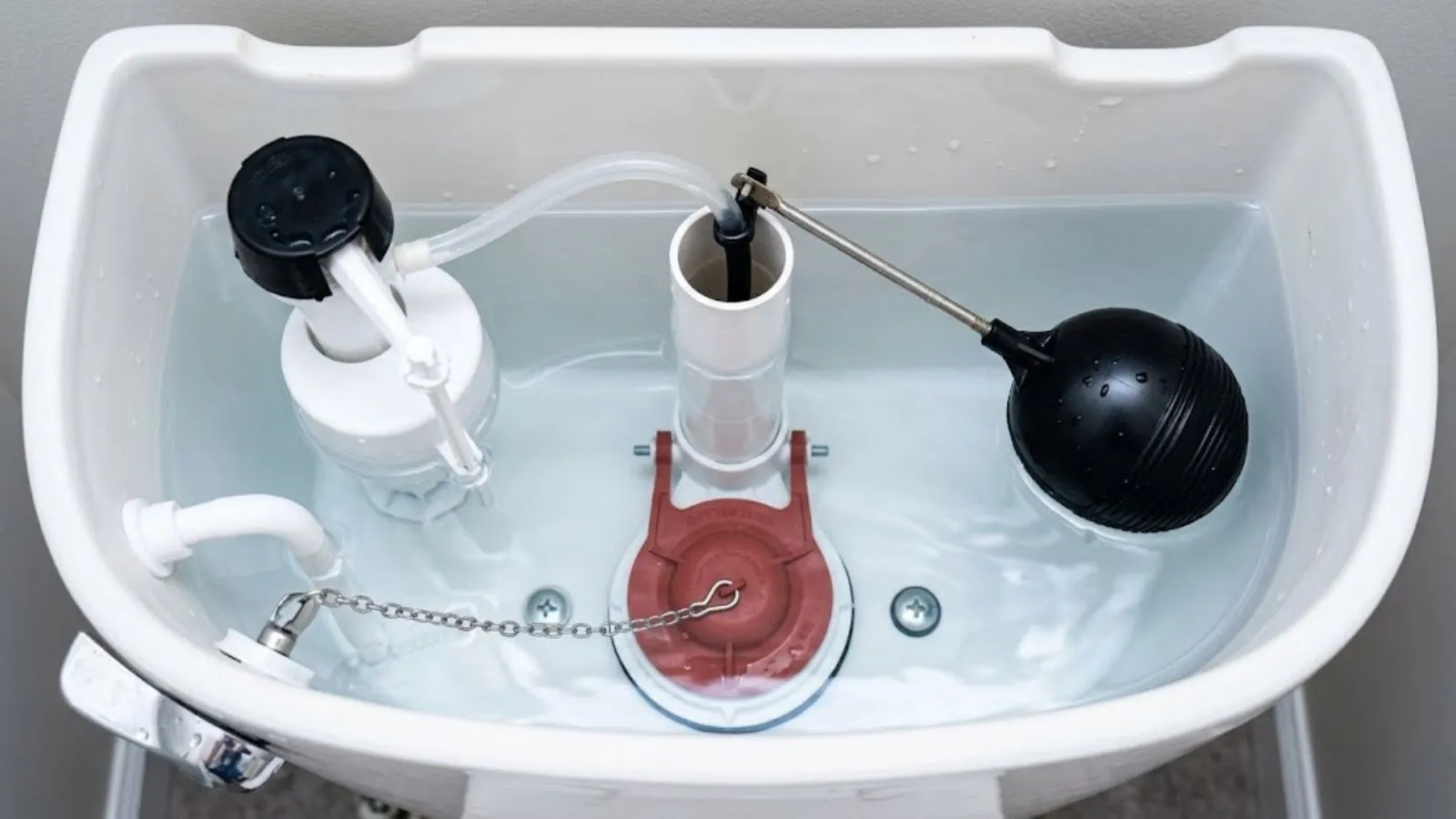
Is the fill valve really the problem?
The fill valve is the tall assembly on the left side of the tank that refills it after a flush. When it wears out, the toilet may run, hiss or fill slowly. A worn flapper at the bottom of the tank can cause a very similar running sound.
Before you buy parts, lift the tank lid and look. If water flows into the overflow tube, the fill valve is not shutting off. If water leaks from the tank into the bowl while the fill valve is quiet, suspect the flapper.
Symptoms and likely causes.
| What you notice. | Likely cause. | Next step. |
|---|---|---|
| Water keeps running into the overflow tube. | Fill valve will not shut off or float is set too high. | Adjust the float, or replace the fill valve. |
| Hissing after a flush that stops slowly. | Worn fill valve seal or debris. | Clean the valve or replace it. |
| Tank refills very slowly. | Clogged valve, partly closed stop valve or worn parts. | Open the stop valve fully, then clean or replace the valve. |
| Toilet refills by itself every so often. | Flapper leaking into the bowl. | Replace the flapper. |
| Water on the floor near the base or supply line. | Failed connection or a cracked tank. | Shut off water and see our toilet repair page. |
What to gather before you start.
- A new fill valve kit. Check that the box says it fits your tank height and supply line.
- An adjustable wrench or pliers for the supply nut and the locknut under the tank.
- A small bucket and a sponge or towels to catch water from the tank and the line.
- A new braided supply line, if the old one is stiff, kinked or stained, since you will disconnect it anyway.
- The manufacturer's instructions from the package. They cover fit details for your exact model.
Install the fill valve, step by step.
Shut off and drain.
Turn the stop valve behind the toilet clockwise until it stops. Flush, hold the handle down and sponge out what remains in the tank.
Disconnect the supply line.
Place the bucket under the connection. Unscrew the supply nut and the locknut under the tank, then lift the old valve out.
Set the height.
Adjust the new valve so the top of the valve sits where the instructions say, relative to the overflow tube. Getting this right keeps the toilet from running.
Seat the valve in the tank.
Drop the valve through the hole and tighten the locknut underneath. Keep it snug by hand and follow the box instructions, since too much force can crack the porcelain.
Attach the refill tube.
Clip the small refill tube to the overflow tube so water flows into it and not across the tank. Reconnect the supply line to the bottom of the valve.
Turn on slowly and test.
Open the stop valve a little, check for drips, then open it all the way. Adjust the float until the water stops a bit below the top of the overflow tube, and flush twice.
Dry the area with a towel and watch the connections for ten minutes. A bead of water at the nut means it needs another small turn.
Water on the floor and you cannot stop it?
Close the stop valve behind the toilet, or the main shutoff if it will not turn, and call the emergency line.
When to stop and call a plumber.
- The stop valve will not turn or leaks when you try. Forcing it can break the valve.
- The tank is cracked or leaks from the base or the bolts. That is a bigger toilet repair, not a fill valve fix.
- The locknut or supply nut is seized, corroded or starts to round off.
- The toilet still runs after a correct install and a new flapper. Something else is wrong.
- Water has reached the floor or ceiling below. Call about leak detection to check for hidden damage.
Garfield tap water and your toilet's fill valve.
The City of Garfield's 2018 water quality report says the city blends its own wells with treated water bought from the Passaic Valley Water Commission. The north end of town gets mostly well water, the south end mostly Passaic Valley water and the middle a mix at the Belmont Hill Tank. The blend can differ from one street to the next, so test your tap and check what collects in the tank.
If you find grit or scale around the old valve, flush the supply line into the bucket for a few seconds before you connect the new one. Debris is a common reason a new valve hisses or fails to shut off. Ask your water utility if you want to know which supply serves your street.
What the job costs and where we come in.
A fill valve kit is a modest purchase, and the real cost of a DIY job is your time and the risk of a wrong fit. If you would rather hand it off, our toilet repair team replaces fill valves, flappers and supply lines in one visit. Cost depends on parts, access behind the toilet and whether the stop valve also needs replacing.
Ask for a written price before work starts. We also serve Lodi and Passaic, and a quick description of the symptom helps the dispatcher bring the right parts.
Questions homeowners ask us.
Most people finish in under an hour. Draining the tank and getting the height right take the most time. A stubborn nut can add more.
Not always. If the braided line looks clean and flexible, you can reuse it. Replace it if it is stiff, stained or kinked, since you are already disconnecting it.
The float may be set too high, the refill tube may be missing from the overflow tube, or the flapper may be leaking. Adjust the float first and check the flapper next.
Most fit standard tanks, but tank height and the shape of the hole vary. Check the package for fit and read the instructions before you buy.
The city report says hardness is above the recommended range and that hardness scales pipes. Scale and grit can foul small valve parts, so checking the tank once a year is a sensible habit.
If water is overflowing, or you cannot shut off the stop valve, treat it as an emergency. Close the main water shutoff and call for help.