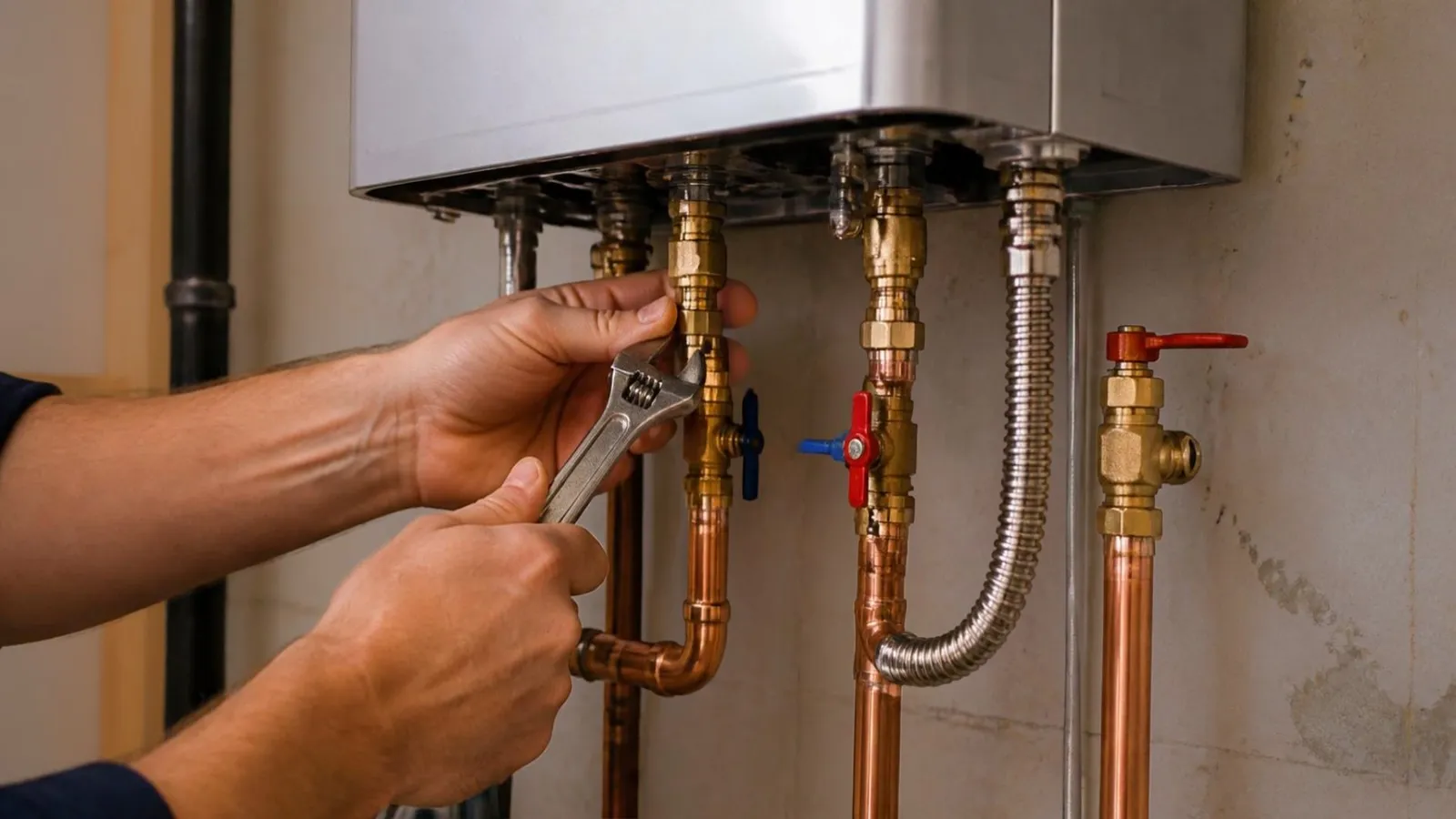
Water heater installation in Garfield, planned the right way.
A good installation begins before the heater arrives. Someone has to measure the space, confirm the fuel supply, check the flue or vent path and size the unit to the household. Skipping those steps is how a new heater ends up undersized, short on venting or too tall for the cellar ceiling.
Most Garfield installs happen in basements with low ceilings, older masonry chimneys and floor drains that have not been touched in decades. We plan around those realities and tell you early when something has to change. According to the State Board of Examiners of Master Plumbers, water heater installation must be done by a licensed master plumber or someone working under one, so ask to see a license before you agree to a price.
Reasons people schedule a new installation.
Switching fuel.
Moving from electric to gas, or the reverse, changes the supply lines, the venting and sometimes the panel.
Moving the heater.
A renovated basement or a tenant unit may need the heater relocated, which means new water, vent and drain runs.
Right sizing.
A new bathroom, a larger family or a second kitchen can overwhelm a 30 gallon tank.
Going tankless.
On demand heaters need the right gas line, venting and condensate drain. See tankless water heater service.
New construction or additions.
A gut renovation of a two family house often adds a second water heater.
Code and safety upgrades.
Expansion tanks, discharge piping and seismic or flood protections matter as much as the unit itself.
Tank or tankless for planned work.
Tank water heater.
- Lower upfront price and simple installation.
- Works with most existing gas and electric supplies.
- Holds a limited supply that can run out.
- Needs floor space and a safe discharge path.
Tankless water heater.
- Heats on demand and can free floor space.
- Needs a gas line and venting sized for the load.
- Benefits from regular flushing in hard water.
- Higher upfront cost and more installation detail.
From planning call to final test.
Site visit or detailed phone review.
We confirm the location, fuel, venting path, ceiling height and what the household really uses.
Written scope and price.
You get a single price that lists the unit, the labor, the venting and any code items.
Installation day.
Old connections are removed or capped, the new heater is set and the water, fuel and vent lines are made up.
Testing and handoff.
We test for leaks, combustion on gas units, temperature setting and discharge, then show you the shutoff valves.
What Garfield basements teach us about venting.
Many older Garfield houses were built when heaters vented into masonry chimneys. A newer high efficiency heater may not use that chimney at all, and an oversized old flue can cause poor draft. Checking the vent path early prevents carbon monoxide risks and failed inspections.
If your cellar floods in heavy rain, we raise the heater on a stand where possible. The National Weather Service's records for the Saddle River gauge at Lodi list crests of 13.94 feet during Hurricane Floyd in September 1999 and 13.5 feet during Hurricane Irene in August 2011, against a flood stage of 6 feet. Garfield shares that river with Wallington, so low basements deserve a plan.
What shapes the cost of a planned installation.
We will not quote a price from a photo alone when the work includes gas or venting. A technician reviews the space and gives you one number.
Rebates and utility incentives change from year to year. Ask us what applies to your fuel type and check the program rules before you buy.
If the heater has already failed.
A planned install is not the same as an emergency swap. If you are standing in water, start with emergency water heater replacement. If the heater still runs but is making noise or leaking slowly, water heater repair may buy you time to plan this project properly.
Nearby towns such as Saddle Brook and Passaic schedule installs through the same dispatch.
Questions homeowners ask us.
Replacement swaps a failed heater in the same spot. Installation covers new locations, fuel changes, new construction and upgrades where the supply, venting or drain has to change.
Usually yes. The new spot needs fuel or power, a vent path, a drain and room to service the unit. We confirm those before quoting.
We count bathrooms, peak hot water use and the number of people at home. Two family houses sometimes call for two heaters instead of one very large one.
An adult should be there to approve the scope and see the final test. We will tell you how long the shutoff will last.
Yes, with the owner's approval. We coordinate access and shutoffs with tenants when needed.
Yes. The emergency line is open 24/7, and a failed unit is handled through the replacement process.
Written by the Garfield Express Plumbing team. Updated October 16, 2026.