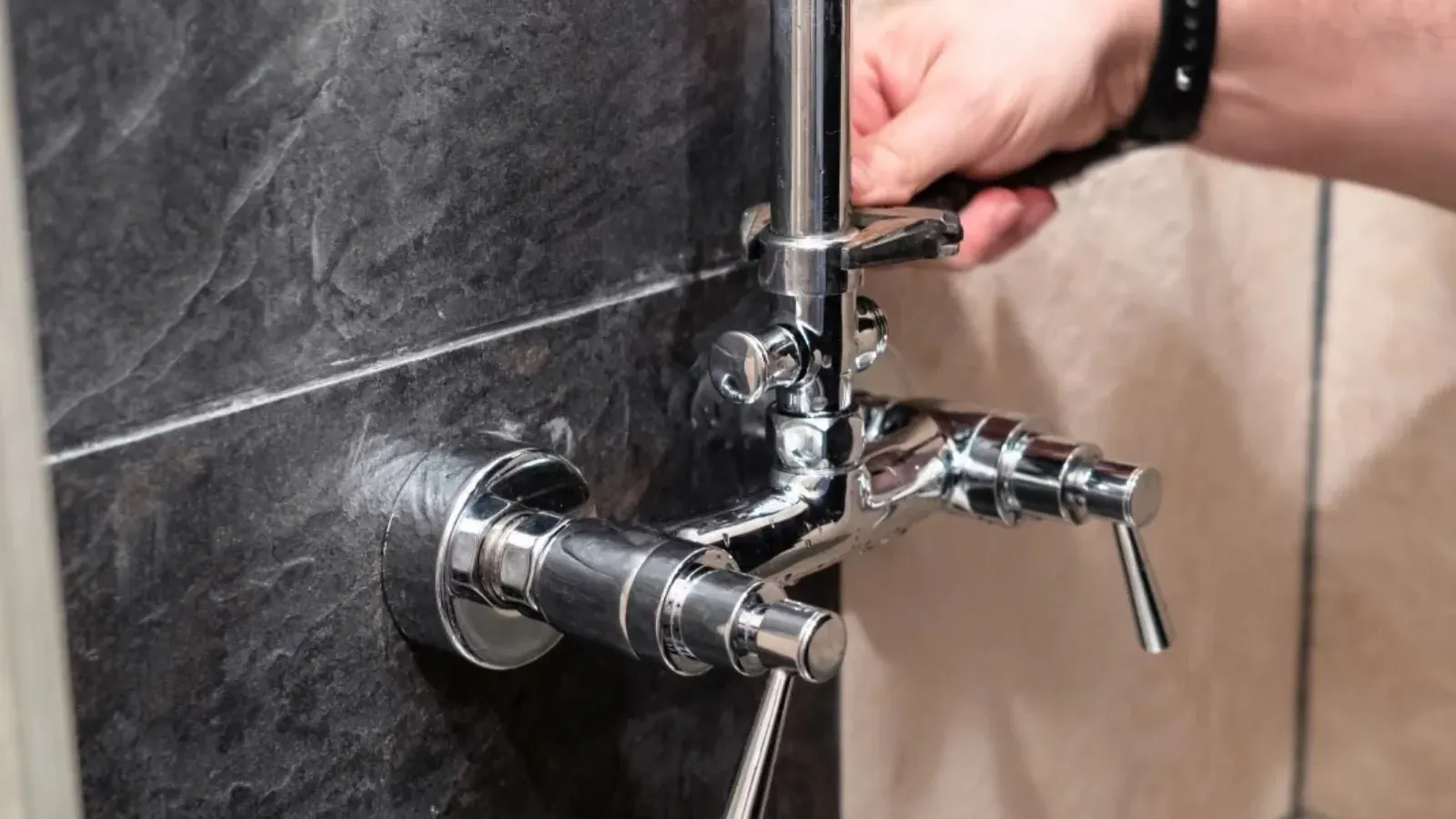
Find out where the water really starts.
A tub faucet is more than the part you see. The spout and handle are the visible trim. Behind the wall sits a valve body, either a cartridge or a stem and seat, plus the supply pipes that feed it.
Leaks at the trim are the easy ones, because the parts are replaceable from the front. A leak behind the wall can run for a long time before it shows, so the location of the first wet spot matters. According to the State Board of Examiners of Master Plumbers, work that opens a wall to reach a valve must be done by a licensed master plumber or someone working under one, so ask to see a license before you agree to a price.
Where the leak shows up and what it means.
| Where the water appears. | Likely cause. | What to do. |
|---|---|---|
| Drips from the spout when the tub is off. | Worn stem, seat or cartridge. | Replace the stem or cartridge. |
| Water leaks around the handle. | Loose packing, worn O-ring or a failing cartridge. | Remove the handle and inspect the seal. |
| Water drips from the spout while the shower runs. | Worn diverter. | Replace the diverter or the spout. |
| Water leaks out at the wall plate. | Failed seal around the valve or a loose connection. | Shut off water and call a plumber. |
| Stain on the ceiling or wall below the tub. | Supply or drain leak behind the wall. | Shut off the main and call right away. |
A dry test to find the source.
Dry everything.
Wipe the spout, handle, wall plate and the tub edge so you can see fresh water. Place a dry paper towel under the spout.
Run the tub only.
Turn the water on at the spout for a minute, then off. Check whether the towel wets at the handle or the wall.
Switch to the shower.
Lift the diverter and run the shower for a minute. Look for water at the wall plate or the shower arm.
Check the shutoff.
Turn the water off, wait ten minutes, then look at the spout and the room below the tub. A fresh drip with the valve closed points to the valve.
Read your water meter.
With every fixture off, watch the meter. A moving dial points to a hidden leak somewhere in the house.
Write down what you saw and where. That record helps a plumber narrow the cause quickly. Photos of the stain, the handle and the meter reading add useful detail, especially if the leak comes and goes.
Stem or cartridge: what is inside your valve.
A two-handle tub valve usually has a stem with a washer and a seat that wears over time. A single-handle valve usually has a cartridge that controls both flow and temperature. Either part can wear, crack or collect mineral buildup.
Replacing the part is simple if the shutoff works. The catch is that many tub valves have no shutoff of their own, so you must close the main. If the main will not close, stop and call. Forcing an old valve is a common way to turn a drip into a flood, because old brass and corroded nuts do not forgive extra force. Our faucet repair team handles tub and shower valves.
Drip at the spout all night?
Call and tell us whether it is a one-handle or two-handle valve. It helps us bring the right parts.
Signs the leak is a wall emergency.
- A stain or sag on the ceiling below the tub. Water is traveling through the floor.
- A soft or spongy wall, loose tile or a musty smell near the tub.
- Water at the wall plate even when the handle is fully off.
- The water meter keeps moving with every fixture closed.
- Sudden spraying or hissing behind the wall. Close the main shutoff and call right away.
A hidden leak can soak insulation and framing quickly. For help finding it, see leak detection. A pipe that has actually burst is a burst pipe repair call.
Garfield two and three family houses and tub leaks.
Garfield has many older one, two and three family houses. In a stacked house, a tub leak on the second floor can show up as a stain in the kitchen or bedroom of the unit below. Tell the owner and the neighbors right away, and take photos for any insurance claim.
Opening a wall to replace a valve may need a permit. Confirm with the City of Garfield building department at 111 Outwater Lane, and ask the plumber to explain what will be opened. In New Jersey, this work belongs to a licensed master plumber or people working under one.
What a repair involves and what shapes the price.
A trim repair means removing the handle and escutcheon, pulling the stem or cartridge and fitting a matching part. A repair that needs wall access takes longer, because tile or drywall must be cut and later repaired. Ask whether an access panel on the other side of the wall could avoid cutting the tile.
Cost depends on the valve type, parts availability, wall access and whether the shutoff works. Ask for a written price before work starts. We serve Lodi and Saddle Brook too.
Questions homeowners ask us.
A worn stem, seat or cartridge in the valve behind the wall is the usual cause. It is a common repair. The valve may need a new part, or in an older home, a new valve.
Sometimes. If you can shut the water off and remove the trim, replacing a stem or cartridge is a reasonable project. Stop if the main shutoff does not close or the parts are seized.
The diverter is the usual cause. It sends water up to the shower head, and when it wears, some water still falls from the spout. Replacing the diverter or the spout fixes it.
Look for a stain on the ceiling below, a soft wall, a musty smell, or water that appears even when the handle is off. A moving water meter with every fixture closed is another sign.
In a two or three family house, tell the owner and the neighbor below right away. Shut off the water, take photos and call your insurance agent. Then have a plumber find and fix the source.
A steady drip at the spout is not an emergency, but it wastes water and wears the valve. Treat any leak that reaches a wall or ceiling as urgent.