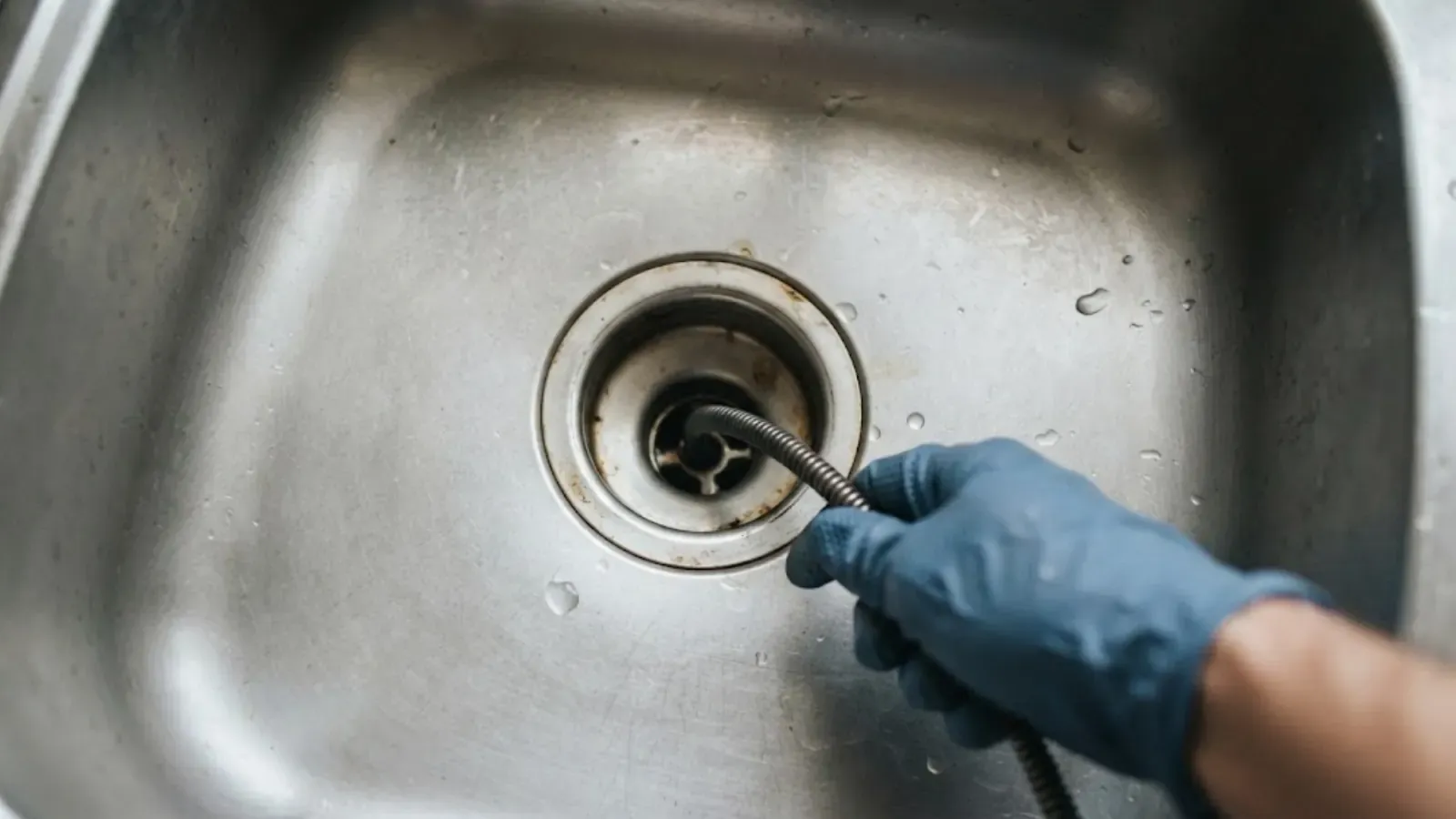
Why fixture drains clog in the first place.
Most clogs are a mix of sticky and stringy material. Grease sticks to the pipe wall, food bits and soap scum collect on it, and hair knots it all together. Over weeks the opening shrinks until water slows to a crawl.
A kitchen sink usually clogs with grease and food. A bathroom sink or tub usually clogs with hair and soap. A toilet clogs when something that should not be there goes down, or when too much paper goes at once. According to the City of Garfield's 2018 water quality report, hardness is above the recommended range, so scale can add to the grease and soap that coat kitchen and bath drain lines.
Kitchen habits that protect the drain.
- Scrape plates into the trash before they reach the sink, and let a basket strainer catch what remains.
- Pour cooled grease into a can or jar, then put it in the trash. Do not pour it down the drain, even with hot water behind it.
- Skip coffee grounds, eggshells and rice. They settle in the trap and pack together.
- Run cold water with the disposal and let it run for a few seconds after you shut it off.
- Wipe pans with a paper towel before washing, especially after bacon, sausage or anything oily.
A disposal is not a trash can. Fibrous food like celery, corn husks and potato peels wraps around the blades and clogs the line, so see our garbage disposal page if yours hums or jams.
Bathroom habits that stop hair and soap buildup.
Use a hair catcher.
A cheap strainer in the tub and shower stops most hair before it reaches the pipe. Empty it after every shower.
Pull the stopper monthly.
Bathroom sink stoppers collect hair and gunk below the rim. A quick clean with a small brush or a plastic drain tool clears it.
Switch to liquid soap if scum builds.
Bar soap leaves residue that combines with hair. Liquid soap and a rinse help.
Keep floss, cotton swabs and razors out.
They look small but catch on rough pipe walls and gather everything else.
What can and cannot go down each drain.
When you are unsure, the trash can is the safer answer. A drain takes water and the things dissolved in it, and not much else.
| Item. | Sink. | Toilet. |
|---|---|---|
| Cooking grease and oil. | No. | No. |
| Coffee grounds and eggshells. | No. | No. |
| Hair. | No. | No. |
| Toilet paper. | Not applicable. | Yes, in sensible amounts. |
| Wipes labeled flushable. | No. | No, they do not break down like paper. |
| Dental floss, cotton swabs. | No. | No. |
| Paper towels and tissues. | No. | No. |
Slow drain that keeps coming back?
A weekly clog is a sign, and a plumber can find the cause. Call anytime for a visit.
Does a hot water flush really help.
Hot water from the tap helps move soap and light grease along, especially if you run it for a minute after a sink full of dishes. It does not melt a solid grease plug, and it can soften some older plastic traps if the water is boiling. Use the hottest tap water, not a kettle poured straight into the drain.
A monthly flush of hot water with a squirt of dish soap is a gentle routine. Use it as upkeep, not as a cure for a clog that is already standing in the sink. Skip chemical drain openers, since they can harm old pipes and are hard on anyone who has to work on the line later.
What to do when a fixture slows down.
Stop adding water.
Do not keep running the tap or flushing. Extra water in a blocked drain only spills out somewhere else.
Try a plunger.
Use the right plunger. A cup plunger fits sinks and tubs, while a flange plunger fits toilets. Seal the opening and push with steady, firm strokes.
Clean the trap.
Put a bucket under the curved pipe below the sink, loosen the nuts by hand and clear the gunk. Reassemble and run water to check for leaks.
Know when to stop.
If more than one fixture is slow, or water gurgles in a toilet when you run the washer, call for help. That points to the main line.
Hard water and older pipe in Garfield homes.
The City of Garfield's 2018 water quality report marks hardness as above the recommended range and says hardness scales pipes. Scale roughens the inside of a pipe, and a rough wall catches soap and hair faster than a smooth one. If you see white crust on your faucets, test your tap and treat slow drains early.
Garfield also has many older houses, so the pipes under your sink may not be the pipes you would pick today. Ask your plumber to look at old, narrow or heavily scaled sections during any visit. Mention the neighborhood too, whether Belmont, Bogart Heights or Plauderville, since a plumber who knows the area can often spot patterns.
When fixture habits are not enough.
Good habits keep the pipes under your sinks clear, but they cannot fix a problem deeper in the system. If you clean the trap, use the plunger and the clog returns within days, a cable or a camera visit is the next step. Our drain cleaning service clears the line and finds the cause, and hydro jetting washes stubborn grease and scale from the pipe wall.
We serve neighbors in Lodi and Passaic as well. Call (973) 488-5410 if a drain is backing up and will not clear.
Questions homeowners ask us.
Grease and food waste are the usual cause. Grease coats the pipe and holds everything else that follows. Scrape plates, pour grease into the trash and use a strainer.
It can help with a minor soap and grease slow-down, but it will not clear a solid plug. Boiling water can also soften older plastic fittings. Use the hottest tap water instead, and call for help if the drain stays blocked.
Not in most homes. They hold together far longer than toilet paper and snag on rough pipe walls. The safe rule is toilet paper only.
They can open a small clog, but they are harsh on pipes, risky to handle and dangerous to splash. They also leave caustic liquid in the pipe for the next person who works on it. A plunger, a trap cleaning or a plumber visit is a safer path.
The city's 2018 report marks hardness as above the recommended range and says it scales pipes. Scale roughens the pipe wall, so soap and hair can catch more easily. Regular cleaning and a hair catcher help, and a plumber can assess old pipe.
Once a month is a fine routine for kitchen sinks, with a little dish soap. Run it for a minute or two after the dishes are done. If a drain needs this every week, something else is wrong.