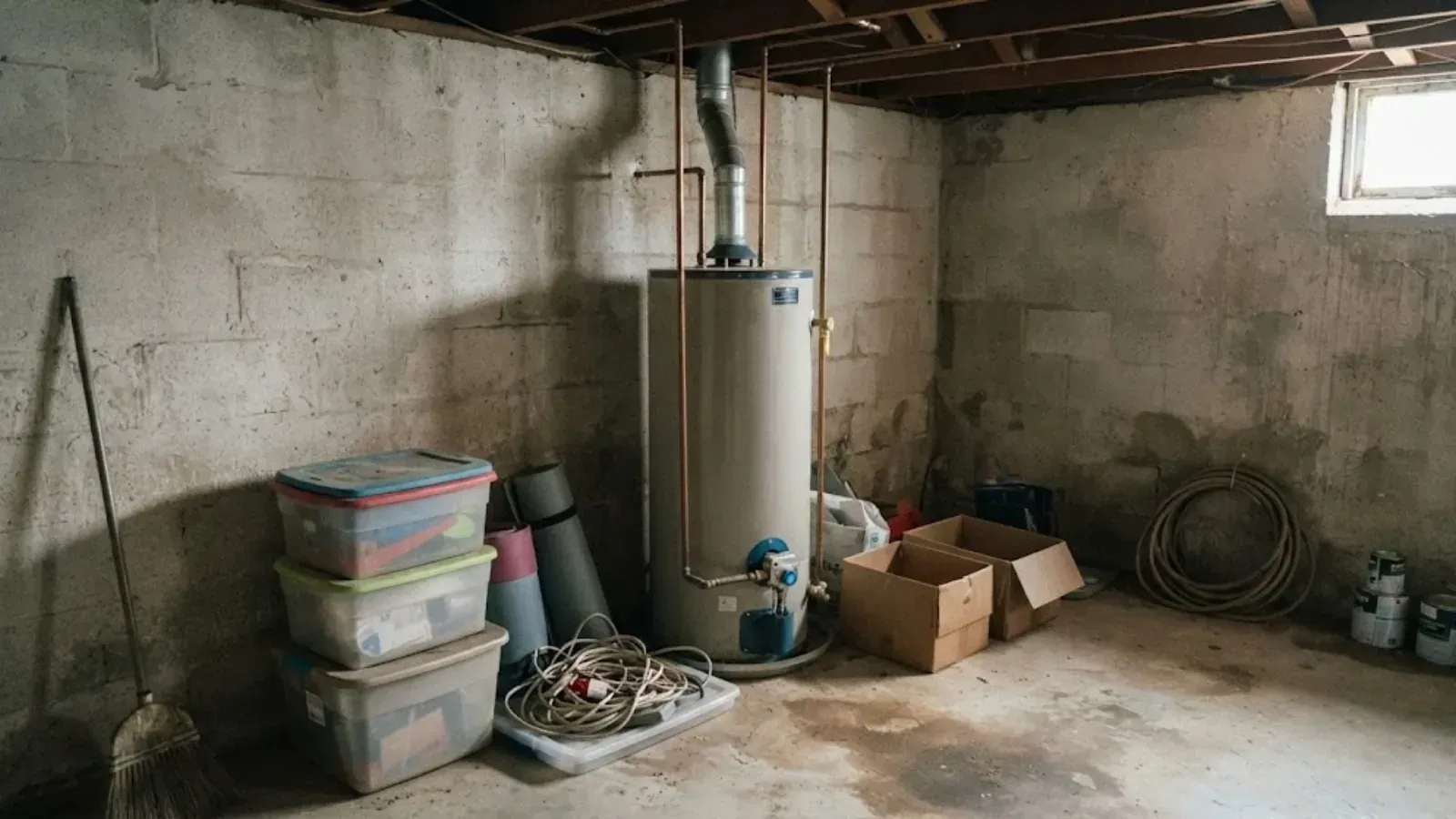
Typical lifespan by heater type.
These are general ranges, not promises for your house. Use them to decide when to start paying closer attention.
| Heater type. | Typical service life. | What shortens it. |
|---|---|---|
| Gas storage tank. | About 10 to 15 years. | Sediment, a spent anode rod, poor venting. |
| Electric storage tank. | About 10 to 15 years. | Failed elements, scale on the elements. |
| Tankless gas. | Often 15 to 20 years. | Scale inside the heat exchanger, skipped flushes. |
| Indirect tank on a boiler. | Often long with care. | Boiler problems, coil scale. |
Find the age of your heater.
Look at the rating plate on the side of the tank. The serial number usually holds the month and year of manufacture, though makers format it differently. If you cannot decode it, photograph the label and send it to us.
If the plate is missing or unreadable, that alone is a reason to plan ahead. Unknown age is treated as old age when a plumber weighs repair against replacement.
Also note the capacity and fuel on the label. If your household has grown or shrunk since the heater was installed, the next unit does not have to match the old one. That is a good moment to ask whether a different size would fit your hot water use better. According to the City of Garfield's 2018 water quality report, hardness is above the recommended range, so a tank in Garfield can collect sediment faster than the age rule of thumb suggests.
Signs your water heater is near the end.
Any one sign is a reason to look. Two or more together usually mean it is time to plan a replacement.
Rust colored hot water.
Rust that shows only in the hot tap points to the tank interior.
Rumbling or popping.
Sediment hardens on the tank floor and traps steam bubbles beneath it.
Moisture at the base.
A slow weep from the tank body cannot be patched.
Less hot water than before.
A thick layer of sediment takes up space meant for hot water.
Repeat repairs.
A second or third repair in a short time suggests the whole unit is tired.
Not sure how old yours is?
Send us a photo of the rating plate and we will tell you what we see.
The anode rod and a yearly flush.
Inside a steel tank sits an anode rod that corrodes first, so the tank steel does not. Once that rod is used up, the tank itself starts to rust. Checking or replacing the rod can add years to a tank that is otherwise sound.
A yearly drain of a few gallons removes some of the sediment before it hardens. That is a small habit with real payoff. If the valve is stuck or clogged, stop and call rather than forcing it, since a broken drain valve is a flood waiting to happen.
Hard water, the Belmont Hill Tank and your heater.
The City of Garfield 2018 water quality report says the city supplements its own wells with treated water bought from the Passaic Valley Water Commission. The supplies blend at the Belmont Hill Tank, with the north end mostly well water, the south end mostly Passaic Valley water and the middle a mix.
The same report marks hardness as above the recommended range and says hardness scales pipes. Scale builds on the tank floor and on heating surfaces, so a yearly flush matters more than it might in softer water. Test your tap, or ask your water utility, and tell your plumber what you find.
Many older houses here keep the heater in a cellar near the boiler or laundry sink. A slow leak in that spot can go unseen for weeks, so put a look at the floor around the tank on your monthly list.
A quick yearly check you can do yourself.
- Look at the floor around the tank for damp spots or rust stains.
- Check the pipes on top for green or white crust at the fittings.
- Lift the test lever on the relief valve briefly and watch that water flows out of the discharge pipe, then stops.
- Listen during heating for rumbling or popping from the tank.
- Write down the date you last drained or serviced the unit.
If the relief valve will not reseat or keeps dripping, do not cap it. Call us, because that valve is a safety device.
Repair now or replace.
A failed thermostat, element or igniter on a younger tank is often worth fixing. A leaking tank body is not. See our pages on water heater repair and water heater replacement for how each path works.
If your tank is in the last third of its expected life and needs a pricey repair, replacement usually makes more sense. Ask for a written price on both options before work starts.
What to do if the tank starts leaking.
- Turn off the cold water valve on the pipe above the tank, and switch off the gas control or the breaker.
- Do not touch the tank if it hisses, bulges or feels extremely hot.
- Shut off power to wet areas only if the panel is dry and easy to reach.
- Photograph the damage for your insurer before you move anything.
- Call the 24/7 line at (973) 488-5410 and tell the dispatcher the tank age if you know it.
Planning ahead beats an emergency.
A heater that fails on a cold night leaves little time to compare options. Planning gives you room to choose a size, a type and a date that suits your household. It also lets you schedule around the building department, which lists plumbing inspections on Mondays and Wednesdays in the late morning, so confirm with them.
A planned swap also lets you shut off the water at a calm moment, move stored items away from the tank and have the old unit hauled out without a rush. Ask for a written price before work starts, and keep the rating plate photo with your home records for the next time.
We also serve Lodi and Passaic, and you can reach us at (973) 488-5410 to book a look at your tank.
Questions homeowners ask us.
Storage tanks commonly serve for about ten to fifteen years, and tankless units often run longer with regular flushing. Water quality and maintenance can move that range either way.
If it is old, rusting or leaking, planning a replacement is wise. Waiting for a failure can mean water damage and a rushed choice at a bad hour.
Yes. The rod corrodes in place of the tank steel, so replacing a spent one can extend the life of a sound tank. It will not rescue a tank that has already rusted through.
A yearly drain removes loose sediment and slows scale buildup. Hard water makes this habit more valuable. If the drain valve will not open or reseat, stop and call a plumber.
The city report marks hardness as above the recommended range, so scale is a fair concern anywhere in town. The blend varies by neighborhood, so test your tap and flush the tank on a yearly schedule.